Letting Go & Acceptance
31 articles

The Power of a Stranger's Validation: What Happens When You're Finally Seen
There is something quietly radical about being seen by someone who has nothing to gain from seeing you. No shared history. No reason to be kind. No obligation to agree. Just a stranger, and their words, cutting through years of noise to land somewhere deep and still inside of you.
More tagged “Letting Go & Acceptance”

What Burnout Really Looks Like — and How to Listen to It
After one of the most challenging years of my life, I think I finally realise what burnout is. The saddest thing of all is that now I am on the right side of my experience, I watch helplessly as others around me experience the same thing but with different outcomes.

Signs from the Universe: How to Listen When Life Is Speaking to You
I want to tell you about two things that happened to me recently. By any objective measure, neither of them is remarkable. One involved a car. The other involved chewing gum.
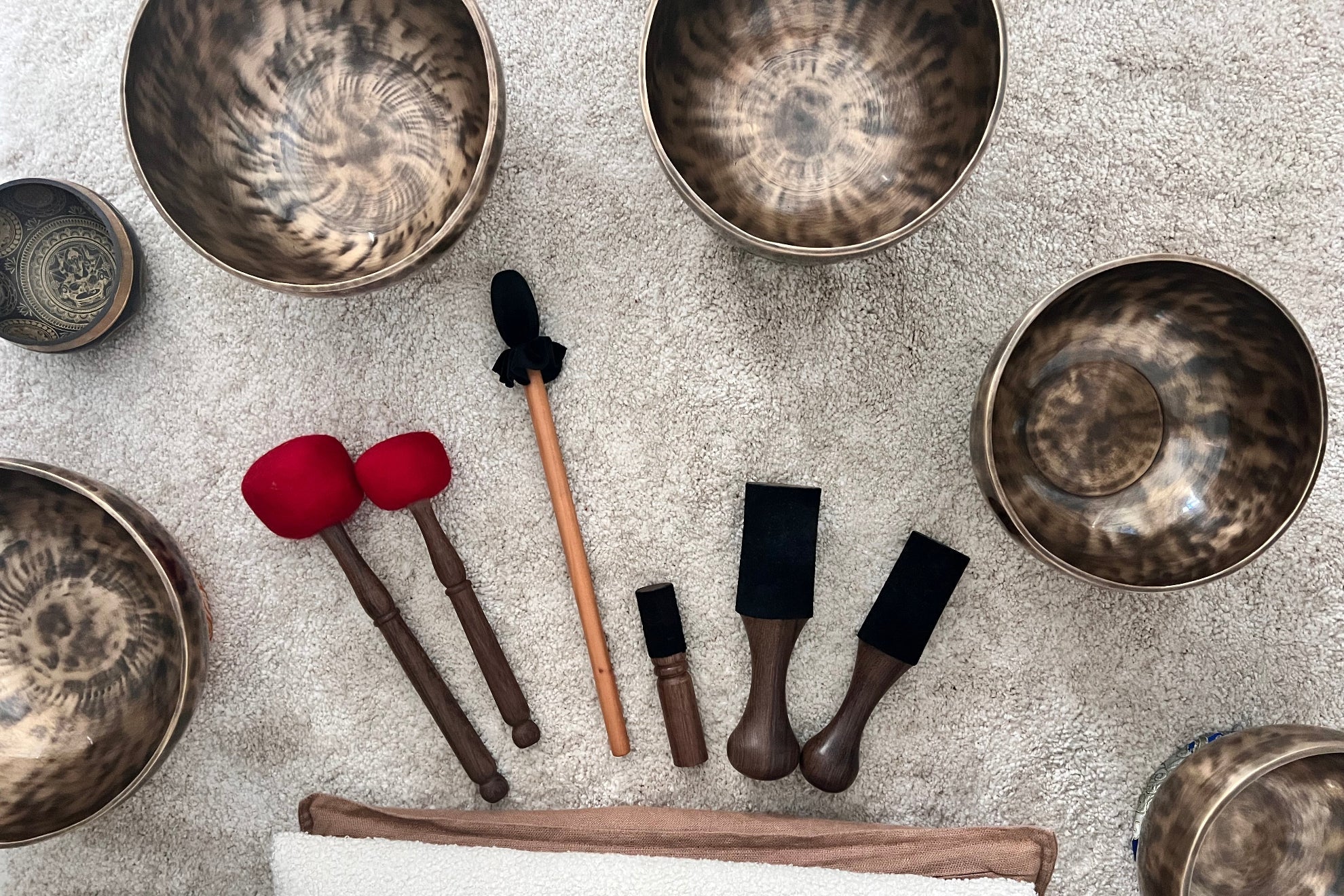
Sound Healing in Yoga: Why Learning to Receive the Tones Changes Everything
The first time I experienced a sound bath, I didn't quite know what to do with myself. I lay there, watching the ceiling, waiting for something to happen and then frustrated with myself for waiting, because weren't I supposed to just... let go?

The Yogic Path of Remembering: Seeing Beyond Samskaras and Old Narratives
There are moments in life when you realise that what you are reacting to is not the situation in front of you, but the echo of something much older.A familiar sting.A tightening in the chest.A story your body remembers even if your mind has forgotten its origin.

Meditations as Portals: Shifting the Mind, Soothing the Body
We spend much of our lives replaying the past, thoughts become familiar, feelings become habitual, and the body begins to live in cycles of memory. What feels like “just the way things are” is often simply a loop of remembered emotions.

Beyond the Past: Rewriting the Stories We Live By
There comes a time when we begin to notice that the patterns repeating in our lives are not coincidences; they are mirrors. The way we love, react, protect ourselves, and withdraw often stems from stories we didn’t consciously choose. They are scripts written by earlier versions of ourselves, shaped by our experiences, emotions, and beliefs.
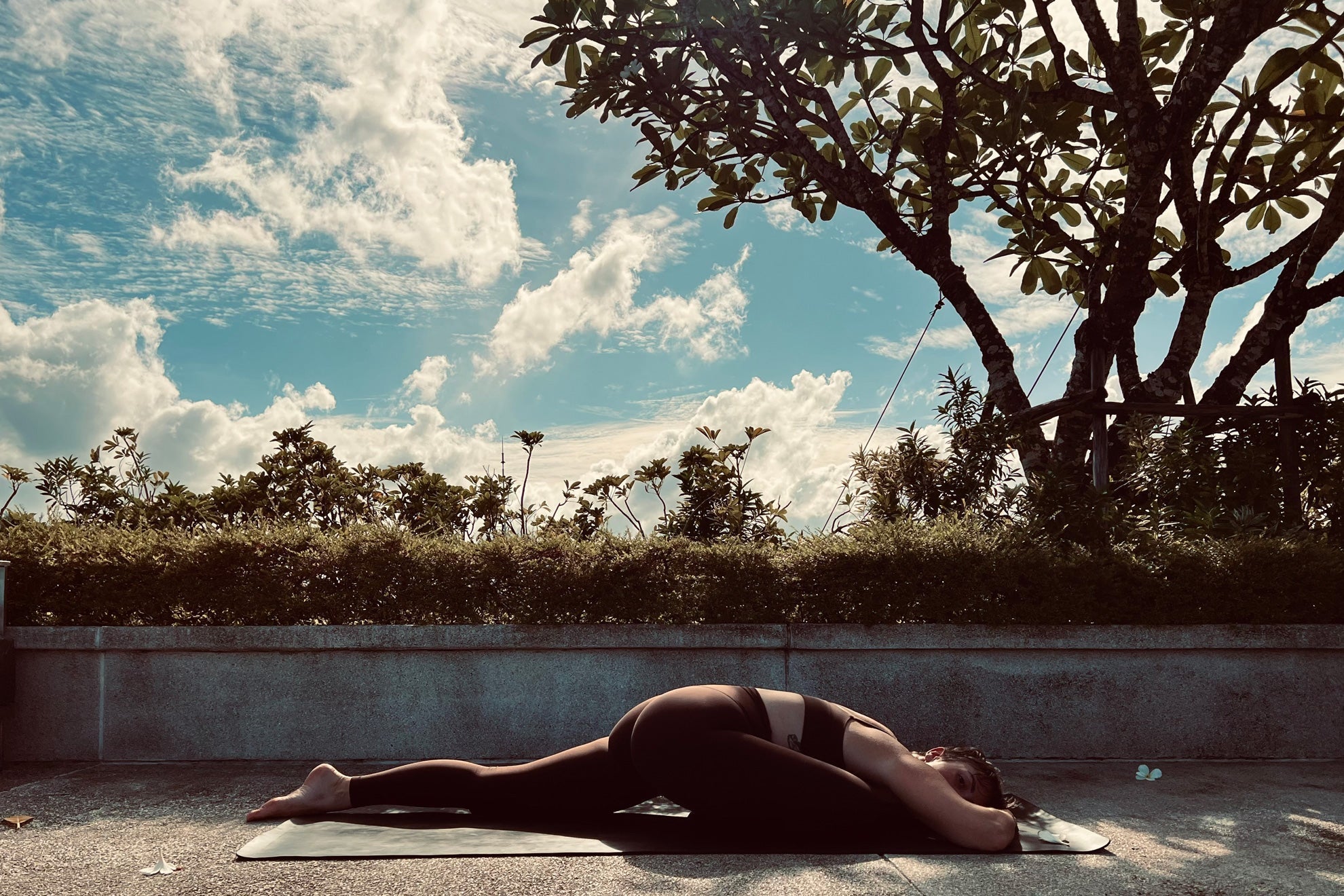
The Things I thought I needed (and what I actually found)
When I set out on what I half-jokingly called my adult gap year, I had a very clear picture of what I was chasing. I wanted adventure. Something new every day. A change of scenery. Access to incredible things for my photography.
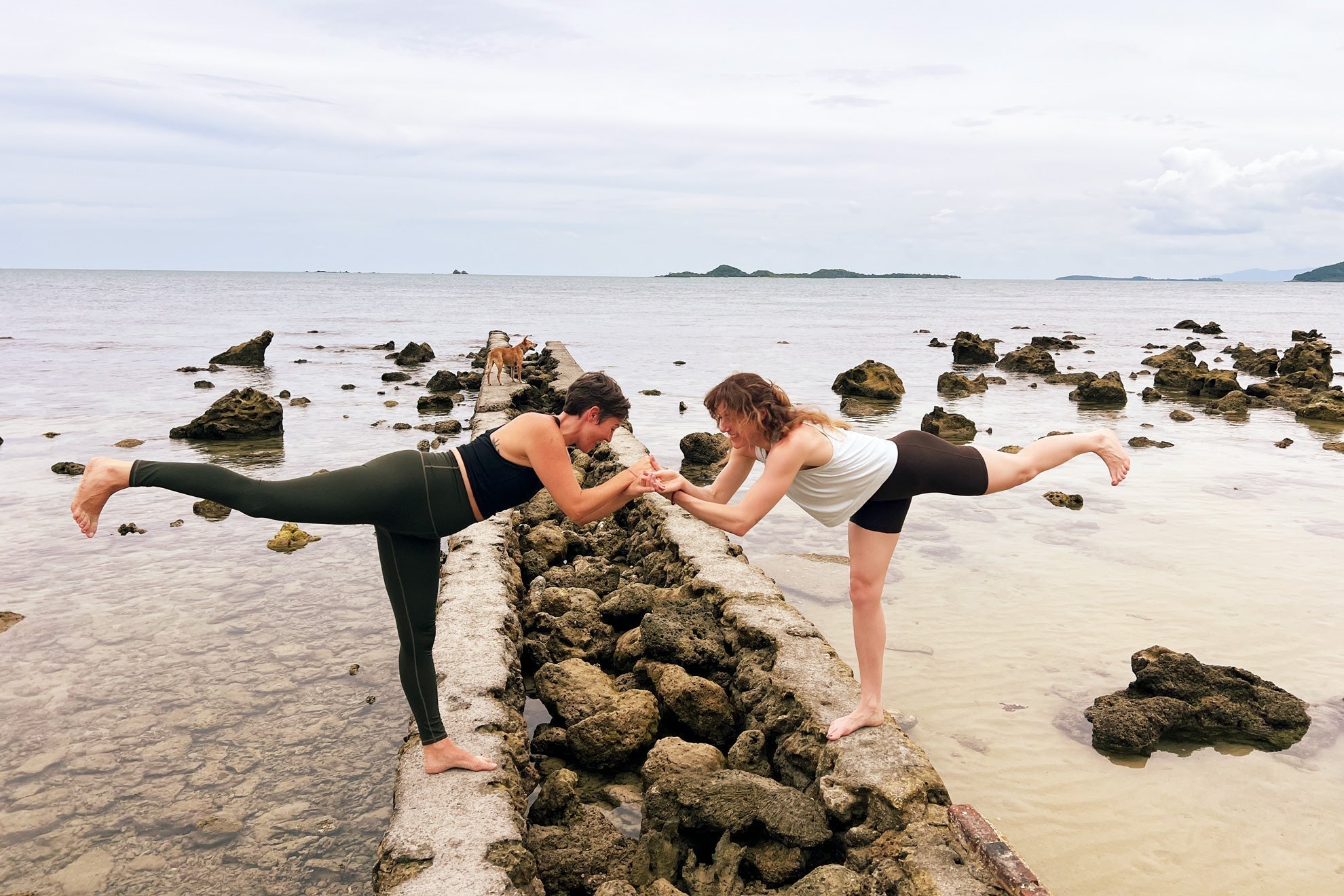
Chance Encounters That Change You: How Travel Brings the Right People Into Your Life
There are people in our lives who remind us to play; the ones who make you want to cartwheel on the beach, run along the sand, or balance, laughing, in a rock pool in warrior three. On my Koh Samui retreat, there was one such person: Bronte.
When People Show Up: Embracing Divine Timing and Connection
In the tapestry of our lives, certain individuals appear at pivotal moments, their presence seemingly orchestrated by forces beyond our comprehension. These encounters often feel serendipitous, yet within the framework of yogic philosophy, they are seen as manifestations of divine timing, guiding us toward growth and self-realisation.

The Light We See in Others: A Story of Gratitude and Human Connection
There are moments in life when we meet people who feel like mirrors. All the qualities we long to recognise in ourselves appear so effortlessly in them. And then, as you spend time together, you realise something extraordinary: what you see in them is what they see in you. The connection becomes something rare and beautiful — a space where you bring out the best in one another, even though just days before you were strangers.

Everyday Moments That Are Yoga (Without You Realising)
Yoga is often thought of as postures on a mat or quiet studio time. Yet the ancient texts describe it far more broadly, as a framework for cultivating steadiness, awareness, and presence in every aspect of life. The Yoga Sūtras tell us:

Transformation: What It Is and Why Yoga Retreats Promise It
Transformation is a word we see everywhere these days, especially on retreats. But what does it really mean? And why are so many retreats offering it as part of their experience?

Saying No Without Guilt: Gentle Practices for Self-Respect and Balance
In times past, people could retreat into caves or forests in search of clarity, stepping away from the noise until answers arrived in silence. Today, life feels far less simple. We are constantly pulled in different directions, with advice, expectations, and ideas about wellness and success coming at us from all sides. Each day presents countless small choices: what to eat, how to spend our time, who we spend it with, and even how we speak up for ourselves. Learning to say no with kindness and without guilt is not just about the big decisions; it’s about honouring these small choices, nurturing self-respect, and creating balance in everyday life.
The Multi-Dimensions of Wellness Part 2: A Gentle Guide to Living Well

On Retreat with Your Yoga Teacher: A Journey Back to Yourself
I have been practising yoga for about eight years and teaching for the past eighteen months. When I finally felt it was my time to guide others along the yogic journey, I also knew that my own practice was far from finished. My curiosity and hunger for growth led me to immerse myself in three Moksha Yoga Teacher Trainings. After completing my 200-hour training in Bali in January 2024, I continued with a 110-hour Meditation Teacher training, and then dove into Yin and Sound Medicine simultaneously.

What I Wish I Knew Before Visiting Sri Lanka
Sri Lanka is often painted as a tropical dream, with endless beaches, warm smiles, and jungle adventures. But beyond the postcard moments lies a raw and untamed beauty that asks you to slow down, adapt, and embrace its imperfections. This isn’t a trip that always runs to plan, and that’s where the magic begins.
Yoga as Life’s Lens: Reflections on Autobiography of a Yogi
Paramahansa Yogananda’s Autobiography of a Yogi is more than a spiritual memoir; it’s an invitation to see life through the lens of the soul. In his telling, the extraordinary becomes accessible, not as far-off miracles but as a way of living rooted in self-awareness, discipline, and love.

20 Reflections from The Surrender Experiment by Michael A. Singer
I read The Surrender Experiment just days after walking away from my corporate job, twelve months into the unknown. No guarantees, no structured plan. Just a quiet knowing that something had shifted.

20 Moments from The Untethered Soul by Michael A. Singer
A journey inward to awareness, stillness and freedom. Some books arrive like whispers. Others arrive as gifts. For me, The Untethered Soul was both.

Going Home at 38: What It Means and Why It Matters
Home has been in flux for me lately. With travel comes the idea that I’m a nomad, that I can become comfortable wherever I lay my head. And to some extent, it’s true. I open a suitcase, light some incense, set up a playlist, and move on my yoga mat, and I feel grounded. A sense of home lives in these rituals.

How You Can Build a Nervous System-Supportive Routine
A personal guide to tuning in, slowing down, and finding your way back to yourself. There’s no one-size-fits-all when it comes to nervous system support.It’s not about following a strict wellness checklist or chasing perfection — it’s about tuning into your own rhythms, your own seasons, and your own signals.
Returning to Ourselves: The Tiny Shifts That Make Us Human, The Unexpected Joy of a Stuck Song
Something remarkable happened to me the other day. It won’t sound impressive to you, but I found it profoundly telling about my current mental capacity compared to where I was a few months ago. I got a song stuck in my head. I know it sounds so basic, but I do not remember the last time something as pedestrian as this happened to me. My mind is used to running about 100 mph with so many pointless things: the self-narration, the criticisms, the to-do list, the judging, the what-ifs, the wondering what was meant by something someone said. It’s all just noise. None of it matters. Not really.

What I Didn’t Do in Bali This Time
Or, what happened when I threw out the itinerary and finally listened to that quiet inner voice. This isn’t an anti-blog. It’s not a rebellion against to-do lists, or a rejection of all the amazing things Bali has to offer. It’s simply an invitation to do things your own way.

What Travel Taught Me About Letting Go: A Journey Beyond the Itinerary
We’ve been in Vietnam for 12 days, and I’d be lying if I said it’s been plain sailing. After the peace we found in Bali, this rhythm of packing up and moving every 4–5 days feels tedious. There was something grounding about our daily yoga practice there, something magical in the stillness that gave our time structure and soul. Now, without that anchor, we find ourselves drifting, disoriented and restless.

Leaving Melbourne: On Love, Privilege, and the Search for Home
I wrote this piece back in April 2022, and it feels poetic that it still holds relevance now, three years later, in April 2025. I’ve left most of it unchanged. It speaks to something tender about the way time carries us—sometimes with a gust, other times with the softest nudge from one place to the next.

Leaving Again, This Time It’s Different
We left Bali today after two wonderful months of getting to know ourselves again. That might sound odd, but when you’ve lived in survival mode for so long, it’s impossible to know who you are beneath the armour—armour that’s protected you from chaos, but also from truth. Truth like: you were ticking boxes, going through motions, cohabiting with someone who was quietly slipping into sadness. And truthfully, the silence about that sadness made it hard to distinguish what was "normal" from what was drowning.

Learning to Sit With Yourself (and Everyone Else Too)
Regulating our emotions is a journey. You might be someone who feels deeply. Who notices the shift in the room when someone else enters. Who picks up on unspoken tensions, unmet needs, and unsaid apologies. You might be empathetic, curious, creative—and sometimes, exhausted. You may have learned to manage your emotions with a certain grace, yet still find yourself undone by the sudden sharpness of disappointment or frustration.
Ecstatic Dance: A Homecoming to the Body
While in Ubud, I’ve been trying to open myself to everything this place offers. There’s a current of possibility here, pulsing quietly beneath the surface. After experiencing the depths of sound healing—something I’ve done before and always found moving—I felt curious to take it one step further.
What is self-love? Why is it so important and what benefits will it offer?
Self-love is when you put yourself first, it might be for a moment or once a week or maybe it's whenever you need to self-soothe. It’s finding things that are just for you. Moments that make you happy that you can pull on and continue to cultivate over and over again.

The Multi-Dimensions Of Wellness Part 1: Understanding the Whole of Who We Are
Living a wholesome life with good stable mental health is what we all dream of, isn’t it? Why is it that when you google wellness or well-being you are met with long-form complicated articles, fluffy images with soft pink colours or centres for massage and facial treatments? It’s no wonder we all seem so confused.